


Western Sicily is the part of the island that stretches from Palermo to Trapani and Marsala: Greek temples, hilltop villages, salt pans, islands just a short hop away and some of the most beautiful beaches in Sicily. It is also one of the most heavily planted wine areas in Italy, and you can tell: here wine is part of the landscape.
In this guide you will find what to see, how to get around, where to stay and a few ideas for planning your days without turning the trip into a race.
Getting there and getting around
There are two main airports: Palermo Falcone Borsellino (Punta Raisi) and Trapani Birgi. From Punta Raisi, Castellammare del Golfo and Alcamo are about forty kilometres away, roughly half an hour on the A29 motorway towards Trapani.
The most useful tip is simple: rent a car. The best places, from temples to nature reserves, from wineries to villages, are spread out and public transport does not always connect them well. For the Egadi Islands, on the other hand, you leave the car in Trapani and take the hydrofoil.
What to see in western Sicily
Palermo and Monreale
Palermo deserves at least a full day: the historic markets, the Arab-Norman centre, the street food. A few kilometres away is Monreale Cathedral with its golden mosaics. The Arab-Norman route of Palermo, Cefalù and Monreale is a UNESCO World Heritage Site.
The Gulf of Castellammare: Scopello, Zingaro and San Vito Lo Capo
Between Palermo and Trapani lies the Gulf of Castellammare. Castellammare del Golfo has a castle on the harbour and a lively centre in the evening; a little further west are Scopello, with its old tuna fishery and sea stacks, and the Zingaro Nature Reserve, Sicily’s first nature reserve, with clifftop trails and coves you can only reach on foot. On the other side of the reserve is San Vito Lo Capo, famous for its beach and for the Cous Cous Fest.
Alcamo and the wine hills
Behind the gulf, Alcamo is a country town with a lovely historic centre, Monte Bonifato and, all around, the vineyards of the Alcamo DOC, the home of Catarratto. It is a convenient and quiet base, halfway between Palermo and Trapani.
Segesta
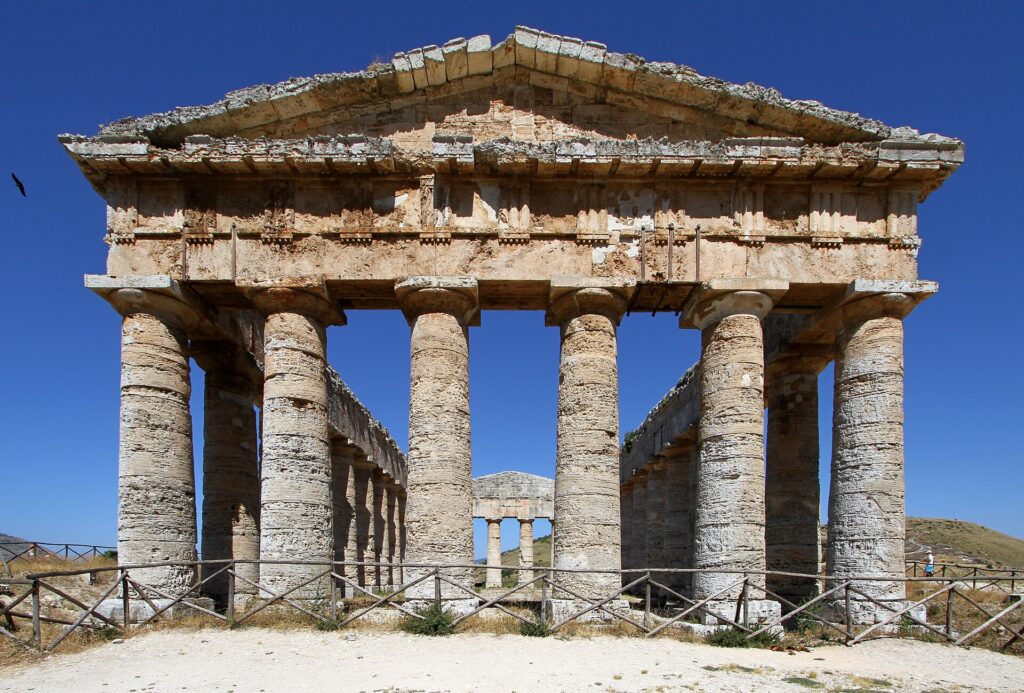
The Doric temple of Segesta, standing alone on a hill among fields and Mediterranean scrub, is one of the most powerful images of ancient Sicily. At the top of Monte Barbaro there is also the theatre, overlooking the valley. You can visit it in half a day and it is just a few kilometres from Alcamo and Castellammare.
Erice and Trapani
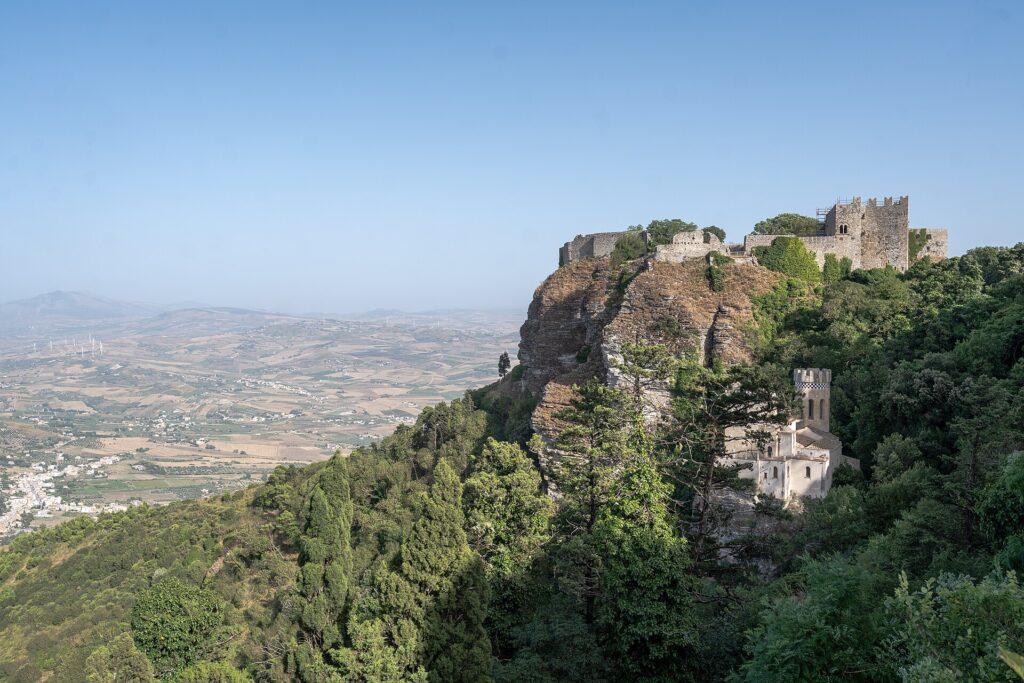
Erice is a medieval village on top of a mountain, high above Trapani: stone alleys, churches, the Castle of Venus and a view that on clear days reaches the Egadi Islands. You can get there by car or by cable car from Trapani. Don’t miss the almond pastries from the village bakeries.
Trapani has a historic centre facing the sea on two sides and a deeply felt tradition: the Procession of the Mysteries on Good Friday.
The salt pans and the Stagnone lagoon
Between Trapani and Marsala the coast is flat and dotted with shallow pools: these are the salt pans, with their windmills. The Trapani and Paceco Salt Pans reserve and the Stagnone lagoon are the place to be at sunset. From the Stagnone, a few minutes by boat take you to the island of Motya (Mozia), an ancient Phoenician city with a small archaeological museum.
Marsala
Marsala is the town of the wine of the same name: an elegant historic centre, the great historic wine houses and the archaeological museum with the remains of a Punic ship. From here you can head south to the archaeological park of Selinunte, with its temples by the sea.
The Egadi Islands
Favignana, Levanzo and Marettimo are less than an hour by hydrofoil from Trapani, close enough for a day trip. On Favignana you get around by bike. In summer it is best to book the ferry in advance. For the beaches of the area, also read our guide to the sea and beaches of Sicily.
Where to stay in western Sicily
The area is not huge, but choosing the right base saves you many hours of driving. Three ideas (we compare them all in our guide on where to stay in western Sicily):
- Castellammare del Golfo or Alcamo: central, handy for Palermo, Segesta, Scopello, Zingaro and Trapani. Ideal if you want to mix sea, culture and wine.
- Trapani: the best base for Erice, the salt pans and the Egadi Islands.
- Marsala: for the Stagnone lagoon, Motya, the historic wine houses and Selinunte.
When to go
Spring and autumn are the best seasons: pleasant temperatures, fewer people and, from late August to October, the grape harvest. Summer is perfect for the sea, but it is hot and the most famous places are crowded: visit temples and villages early in the morning or late in the afternoon.
A 4-day itinerary
- Day 1: Palermo and Monreale.
- Day 2: Castellammare del Golfo, Scopello and the Zingaro Nature Reserve.
- Day 3: Segesta in the morning, lunch and a wine tasting at a winery in Alcamo, sunset in Castellammare.
- Day 4: Erice, Trapani and the salt pans at sunset.
With a few more days you can add the Egadi Islands, Marsala and Selinunte. If you are looking for a longer route around the whole island, see our 7-day Sicily itinerary.
The wine of western Sicily
Between Palermo and Marsala there are vineyards everywhere: Catarratto, Grillo, Nero d’Avola, Syrah, as well as Marsala wine. A stop at a winery is the easiest way to understand the land: you taste, walk among the rows and discover how the wine changes from one hill to the next. If you have never been to a wine tasting, here we explain how it works and how much it costs.
In Alcamo, halfway between Palermo and Trapani, you can stop by Quattrocieli winery for a tasting or an experience among the vines and in the cellar: discover the experiences.
Cover photo: Bradipo69, CC BY-SA 3.0, via Wikimedia Commons